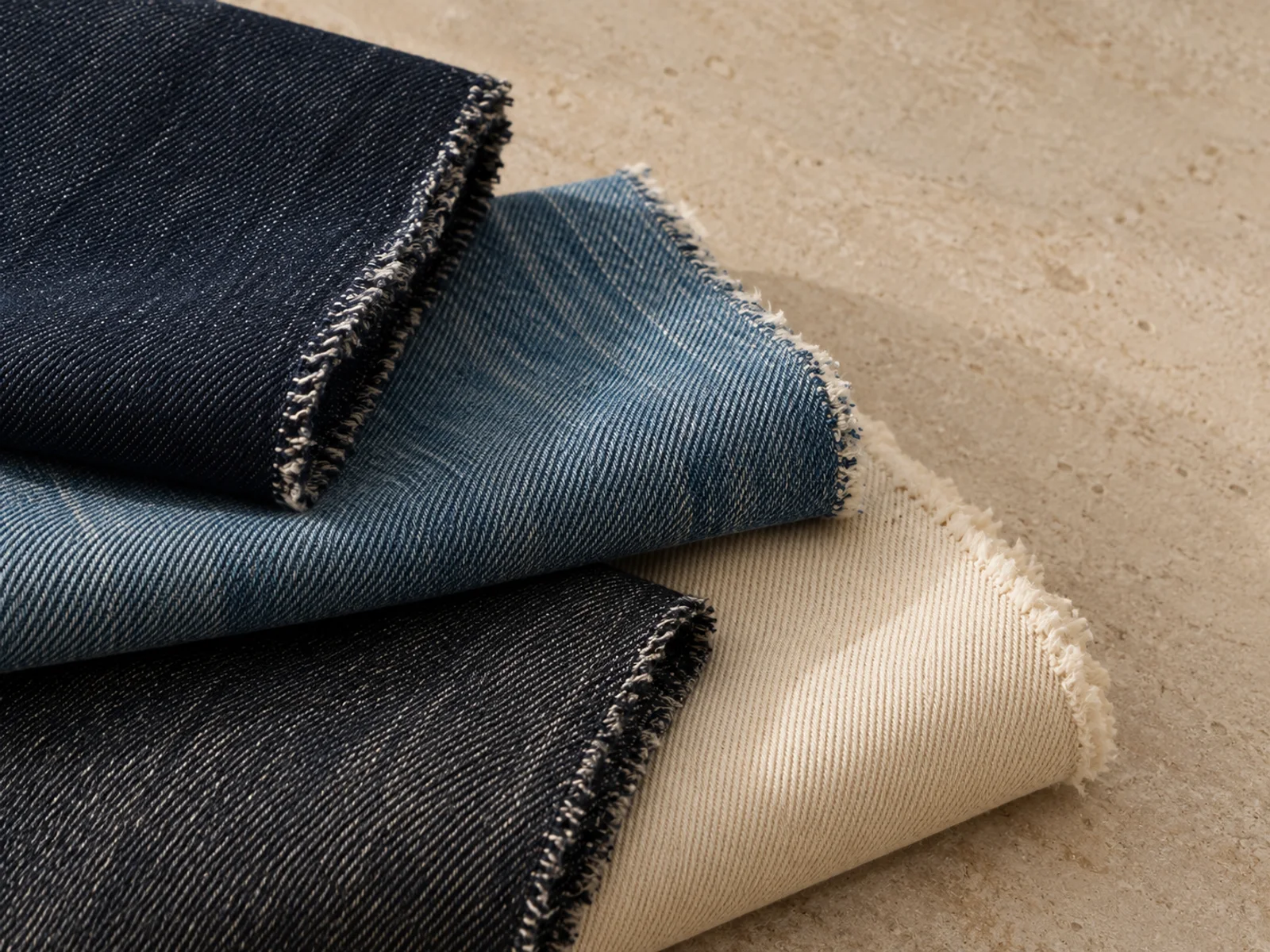
Choosing stretch or rigid denim is more useful when the decision is connected to a real product. Describe the intended fit, movement, hand feel and processing route, then evaluate candidate samples against that brief instead of relying on a general preference.
01 / THE BUYER’S PERSPECTIVE
Define the wearing context
Describe the intended product and its context: everyday casualwear, active childrenswear, utility design or a structured piece. Note the movements the wearer needs to make and the outline you want the garment to retain. Align the sourcing and design teams on these priorities before starting the material discussion with a supplier.
02 / THE BUYER’S PERSPECTIVE
Include the pattern in selection
Avoid approving a material solely from the way a swatch feels in the hand. Consider a representative garment or a trial of the key construction areas. When you have an approved reference product, explain whether it represents the silhouette, comfort or wash appearance; it should not automatically become a requirement to replicate every specification.
03 / THE BUYER’S PERSPECTIVE
Describe the stretch requirement
For a stretch direction, agree on the direction of extension, the assessment method and the acceptance conditions. Distinguish the feeling of movement from the shape after the fabric relaxes. A fibre percentage is not a substitute for assessing the actual sample. For a rigid direction, describe the intended ease, structure and finished hand feel as well.
04 / THE BUYER’S PERSPECTIVE
Review after intended processing
Once initial candidates have been selected, include the agreed washing, sewing or other treatment in the sample plan. Share observations and sample identifiers with the supplier so changes can be discussed precisely. If the processing route changes, confirm the relevant sample again rather than automatically carrying forward an earlier approval.
05 / THE BUYER’S PERSPECTIVE
Keep a record of approval
Use a concise approval record containing the pattern version, material identifier, process version and required conditions. Comparing two directions before narrowing the selection is often useful. Avoid turning phrases such as “stretch is better” or “rigid feels premium” into specifications. The needs of the actual product should determine the decision.
This journal provides material and sourcing communication guidance. Actual specifications, processing capabilities and transaction conditions are confirmed separately with the company.