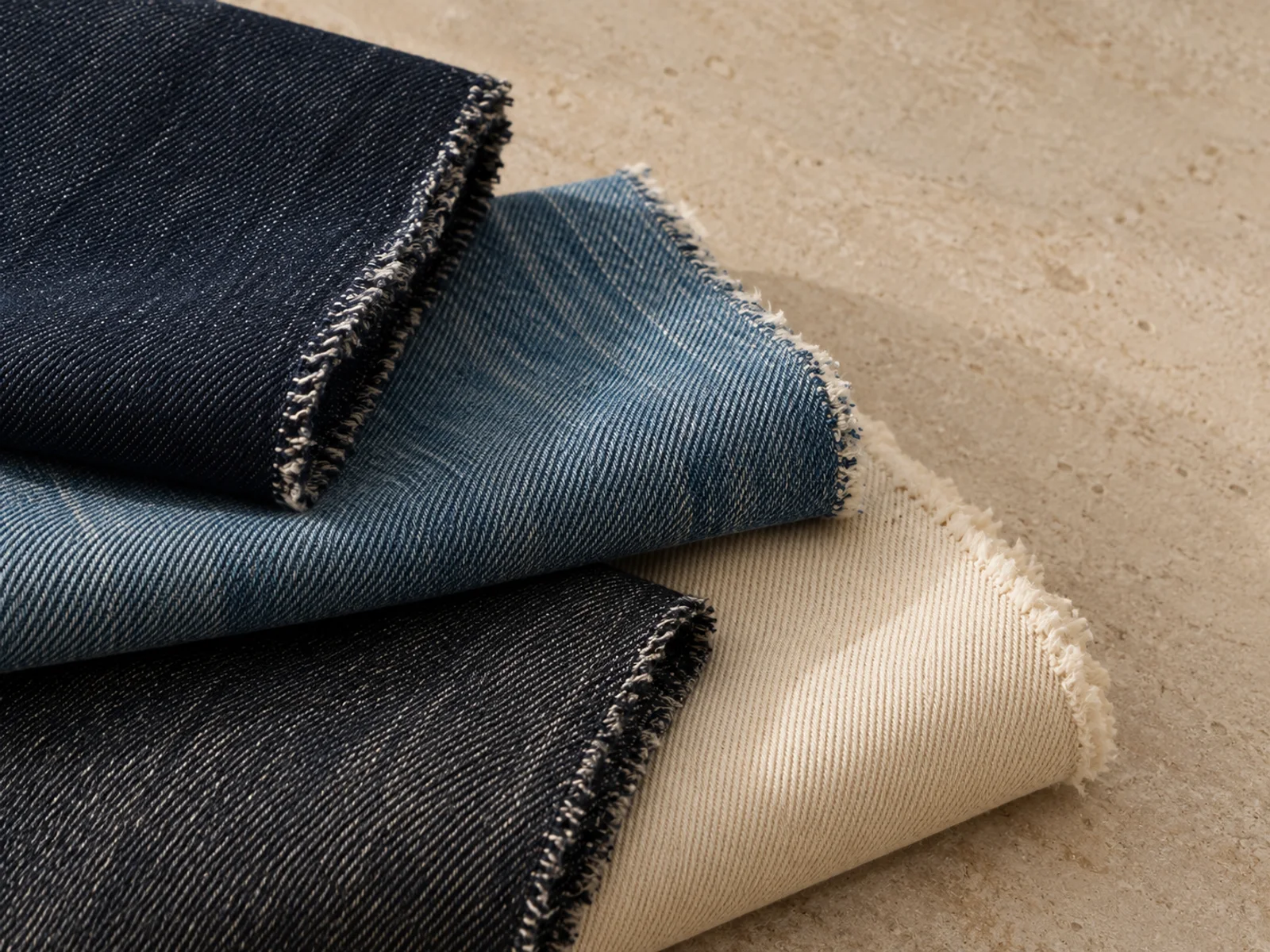
Slub character relates to variations in yarn thickness and the resulting visual rhythm. It offers a different expression from a uniform surface. For material selection, review that expression at the scale of the intended product instead of relying only on a magnified photograph of a small detail.
01 / THE BUYER’S PERSPECTIVE
Look beyond a close-up
A single detail image cannot describe the texture across an entire product. Request a swatch large enough to observe the rhythm and compare it at an ordinary viewing distance as well as up close. Explain whether your intention is a subtle variation or a more pronounced effect so the visual preference becomes a discussable direction.
02 / THE BUYER’S PERSPECTIVE
Identify direction and cutting plans
State the observed texture direction and the intended cutting arrangement in the reference material. For a product with a large continuous surface, consider evaluating a representative panel. For footwear, bags or accessories, a trial of an important construction area can help the teams discuss the connection between texture and structure.
03 / THE BUYER’S PERSPECTIVE
Choose texture with the colour
Discuss texture together with the intended shade and processed appearance. Connect the reference, candidate material and trial outcome in your records rather than judging equivalence only from photographs. Lighting, camera distance and display differences make images useful communication tools, but they should not automatically become the sole basis for approving a material.
04 / THE BUYER’S PERSPECTIVE
Balance expression and application
Describe the support, hand feel and construction conditions needed by the intended product, then confirm the relevant specifications. Visual personality does not replace an application discussion. Keep appearance assessment and technical confirmation as separate records, then connect them through a representative product trial that both teams can evaluate.
05 / THE BUYER’S PERSPECTIVE
Use references to simplify development
Retain the target reference and each candidate sample. Describe changes relatively, such as a closer rhythm, a more pronounced variation or a softer surface expression. Finish with a record that brings the material identifier, approved sample and intended application together so sourcing and subsequent development share the same basis.
References
CottonWorks · Denim Basics ↗This journal provides material and sourcing communication guidance. Actual specifications, processing capabilities and transaction conditions are confirmed separately with the company.