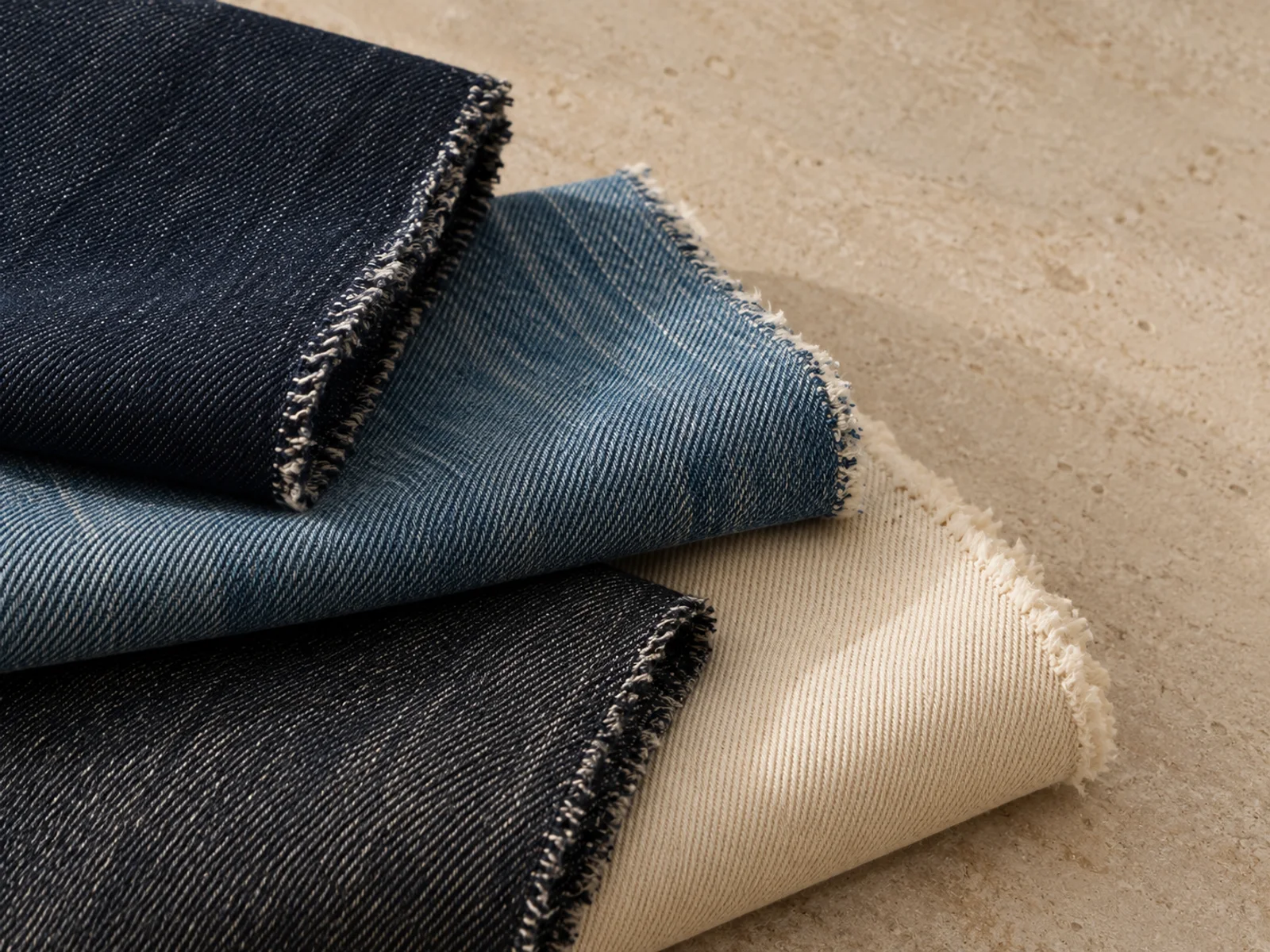
Sample approval connects design judgement with a purchasing decision. Rather than simply saying “make it like this,” record the sample identity, its processing history, the approved conditions and the questions still awaiting evaluation. That record becomes useful when the project develops or another team joins the conversation.
01 / THE BUYER’S PERSPECTIVE
Give every sample an identity
Keep a sample identifier, the supplier’s material reference, the date received and a version note. Do not distinguish similar candidates only as “the dark blue one.” A straightforward register helps the design team, buyer and supplier locate the same material when discussing changes, quotations or the next stage of evaluation.
02 / THE BUYER’S PERSPECTIVE
Record colour and hand-feel references
Compare candidates under consistent viewing conditions and retain a physical reference where appropriate. Explain which photographs describe a direction and which decisions rely on an actual sample. Use clear relative observations, such as a softer hand or a more pronounced texture, instead of leaving a broad phrase like “premium feel” unexplained.
03 / THE BUYER’S PERSPECTIVE
Check the technical items
Organise composition, weight, usable width and the tests relevant to the product. Agree on the assessment method and sample condition with the supplier. The buyer should identify the tests, acceptance conditions and reporting needs for the intended product; a general material description should not be treated as proof that every requirement is met.
04 / THE BUYER’S PERSPECTIVE
Retain process and garment trials
If the design relies on washing, sewing or finishing, record the process version actually used in the trial. Keep the original cloth connected to the processed sample. When the product construction, material or process changes, discuss whether another evaluation is needed rather than extending an earlier approval to every subsequent variation.
05 / THE BUYER’S PERSPECTIVE
Separate sample and order approval
Agreement on a material expression does not confirm minimum quantity, delivery dates, price or responsibility for transport. Keep material approval and commercial terms in related but distinct records. Before ordering, check the latest sample version and the agreed terms again so the product decision and purchasing decision each have a clear basis.
This journal provides material and sourcing communication guidance. Actual specifications, processing capabilities and transaction conditions are confirmed separately with the company.